Already Deploying Institutionally Backed Patented Technology Seed Stage

The grid
can't be
everywhere.
Gaia can.

It keeps the lights steady. It grows crops. One closed loop of water does both. Already installed in downtown Los Angeles, two years before #LA2028.

90%Less water than traditional farming
24/7On-grid or off. It keeps running.
2 in 1Energy + crops. One footprint.

Localized

Each unit stores and conditions energy on-site. When the grid goes down, Gaia keeps running. Power managed where it's needed, not delivered from somewhere far away.

🌱

Productive

The water loop powering the system also feeds the plants growing on top. One system, two outputs. No extra equipment needed.

🔌

Integrated

Designed to be part of the environment it serves, not a standalone box that takes up space. The more boxes that are deployed, the stronger the network and more beautiful the environment becomes.

What Gaia Is

Infrastructure that
does two things at once.

The grid delivers power from far away. When demand spikes or conditions shift, output drops. Gaia works differently. Each unit sits inside the environment it serves, conditioning and stabilizing stored energy through a closed loop of recirculating water, while growing crops from that same water. No weather dependency. Runs on-grid, off-grid or both. Already deployed.

Water moves through a closed loop inside each unit. That circulation conditions and stabilizes stored energy, delivering it steadily to connected loads. The same water feeds crops growing on top. No sunlight required. No wind.

Each unit is a node. One node is useful on one block. A network of nodes across a development, campus or district starts behaving like distributed resilience infrastructure — managing reserve, smoothing load, keeping things running when the grid can't.

On-grid, off-grid or hybrid. When the grid goes down, Gaia keeps running.
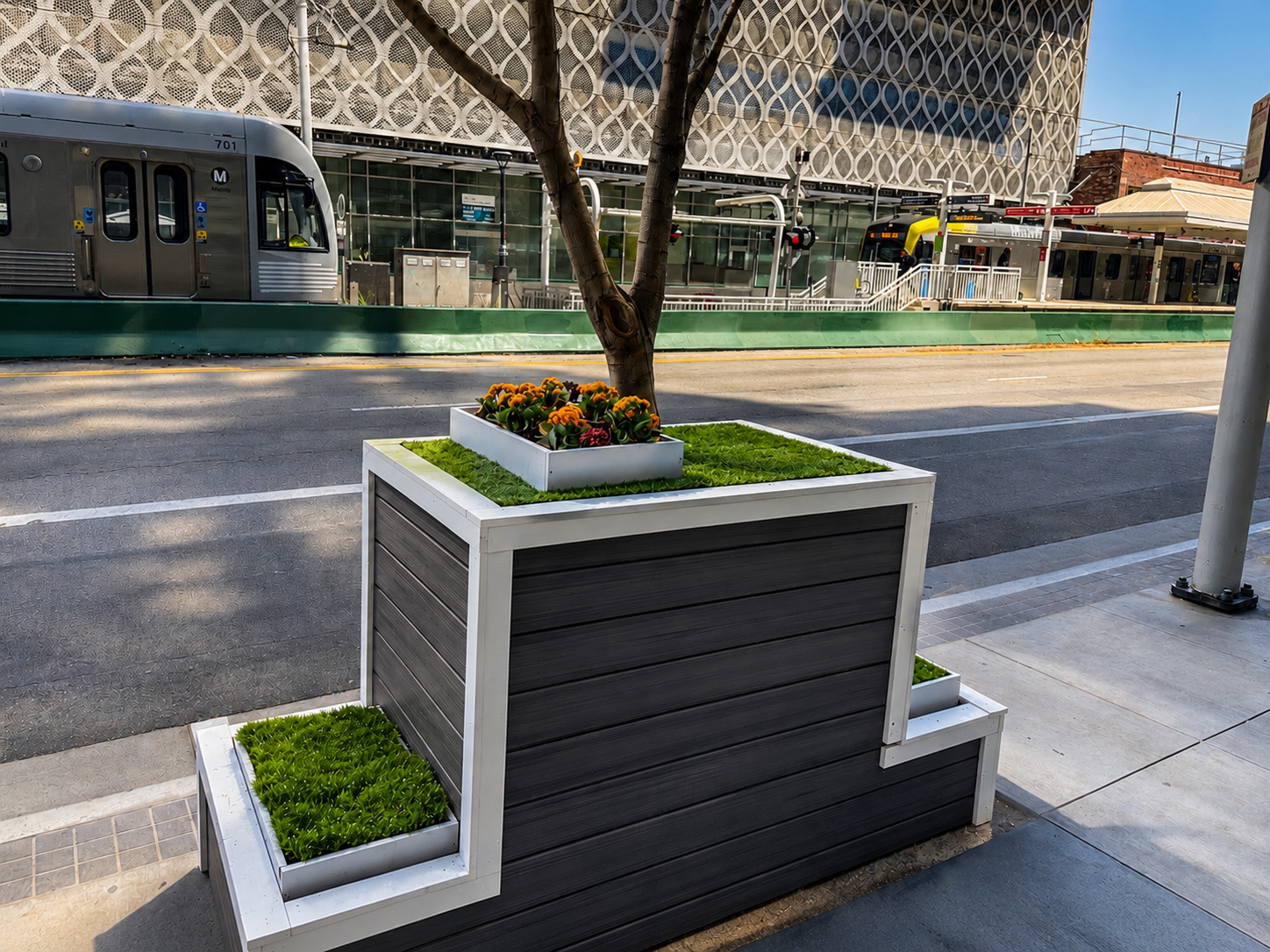
LA Social District at night
Active Deployment

Downtown LA.
June 2026.

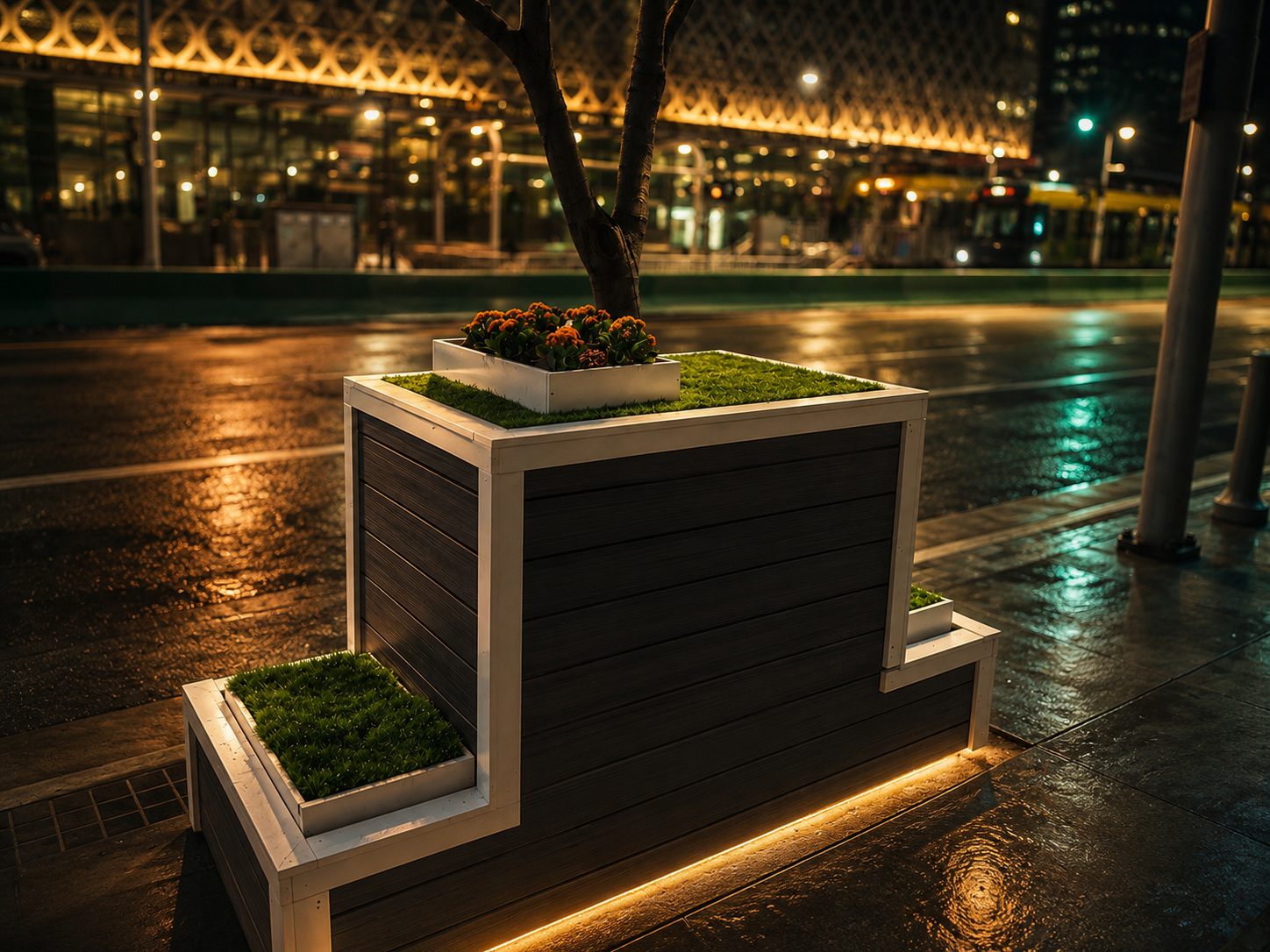
Two patented infrastructure units are running near Pico Station in Downtown Los Angeles, bringing reliable pedestrian lighting to a corridor the city has been working to stabilize. Energy conditioned on-site. Crops growing inside the same frame.

Gaia system
How It Works

Water in.
Power out. Crops on top.

The closed-loop system that makes it possible. How water conditions and stabilizes stored energy, and why the same loop grows crops at the same time.

Not a concept.
Already validated.

Four of the most rigorous institutions in energy, agriculture and urban infrastructure ran diligence on Gaia. All four said yes.

Georgia Tech ATDC
Engineering Validation

Accepted into ATDC's Accelerate program for full systems review. Georgia Tech doesn't validate engineering it doesn't believe in.

LACI
Urban Deployment Partner

Los Angeles Cleantech Incubator selected Gaia for its Spring 2025 cohort and is co-deploying the LA Social District pilot.

Techstars WaterTech
Commercialization

One of the most competitive cleantech accelerators in the country. Fall 2024 cohort. Full Techstars network access and commercial support.

TEDCO
Concept Capital — $25K

Maryland's state technology fund awarded a Concept Capital grant in March 2026. Backed by the state before the city deployment was announced.

Alabama AMP Center
Battery Research Partner

A research collaboration between the University of Alabama and Mercedes-Benz. For a seed-stage company, this partnership provides access to advanced battery testing infrastructure, engineering credibility with institutional buyers and a direct bridge to automotive-grade energy storage expertise. Three things that typically take years and significant capital to build independently.

Active Pilot Customer

LA Social District — Downtown Los Angeles

Active pilot deployment at Pico Station. Two units conditioning energy on-site in one of the highest-traffic public corridors in the city. Collecting real-world performance data now.
See the deployment
Validated by
Work With Gaia

Let's
Talk.

If you have a project, a site or a question — send us a message and we'll respond within one business day.

🏗

Developers & Operators

Add energy resilience and living infrastructure to your project

🏛

Cities & Municipalities

Public realm infrastructure, streetscape activation, resilience

📰

Press & Media

Contact thad@thegaiabox.com directly for media inquiries
We respond within one business day.
Active Deployment

Downtown
Los Angeles.

Active Pilot Deployment — Downtown Los Angeles.
The Location

Pico Station.
Highest traffic. Real conditions.

Steps from Crypto.com Arena. Inside the LA Social District, a 52-block entertainment, arts and commercial pedestrian zone that draws hundreds of thousands of people every month. The Department of Transportation selected this corridor for a major public infrastructure push. Gaia is part of that push.

This is not a contained lab environment. It is one of the most-visited public corridors in Los Angeles. The system is running in those conditions now.

📍
Location Near Pico Station, Downtown Los Angeles
🏙
District LA Social District — Entertainment + Arts Zone, Mixed residential + commercial
🏟
Proximity Steps from Crypto.com Arena
Gaia deployment at Pico Station, Downtown Los Angeles
What Was Broken

The corridor had a
real problem.

The Pico Station corridor needed infrastructure that worked every night, not just on event nights. Lighting that kept the street safe. Systems that didn't go dark when the grid hiccupped. A public realm that felt alive for the people walking home from work, out to dinner, through the neighborhood.

The LA Social District knew what was needed. LACI knew who to bring in.

What Gaia Delivers

Power. Crops.
The same footprint.

The Gaia pilot is active and currently collecting operational data. Each unit draws in stored energy, conditions and stabilizes it on-site, and delivers it steadily to connected loads — keeping the corridor lit at pedestrian scale. Inside the same frame, the system grows plants using the same water that powers the lights. No separate infrastructure. Runs on-grid, off-grid or hybrid.

It is durable, tamper-resistant and designed to run continuously with minimal manual oversight. Public hardware built for public life.

2028

Los Angeles is building for #LA2028.

The infrastructure going into the city right now will be what the world sees when it arrives. Gaia is already part of it.

Pilot Status.

Active — Collecting Data

The Gaia pilot is active and operating as a live field test environment. Because the system is currently undergoing performance validation, certain features and loads may be adjusted, cycled, or temporarily offline as part of ongoing testing. This four-phase validation sequence establishes the performance baseline for all future commercial deployments.

Current Lighting Load — Pico Station

0.7W per bulb · ~50 bulbs per tree · ~35W per tree
Battery Configuration Storage Max Load Best For
100Ah Node ~1.2 kWh 1–2 trees Testing, demonstration, low-load deployments
400Ah Node ~5.1 kWh 4–6 trees Medium-scale deployments
Phase 01 — Current
Standardizing Node Capacity
June 8 – June 19, 2026

Establishing baseline performance for each battery node configuration under real-world load conditions. The immediate priority is upgrading to an 800Ah battery to provide sufficient reserve capacity and ensure reliable operation throughout the deployment period.

Establish confirmed load-to-battery ratios for each node tier under operational conditions at Pico Station.
Phase 02 — Upcoming
Solar Assist Validation
Following Phase 01

Each node paired with a 200W solar array, battery storage, charge controller and monitoring platform. Testing measures daily solar contribution, battery recharge rates, net energy balance and optimal battery sizing for future deployments.

Determine the percentage of daily lighting load offset by solar generation and identify optimal battery sizing ratios.
Phase 03 — Upcoming
Turbine Recovery Validation
June 22 – July 6, 2026

A 12V turbine with a target output of ~5A is integrated into a dedicated recovery charging circuit with an independent recovery battery. Testing measures continuous recovery output, turbine configurations, battery charging rates and long-duration charging performance.

Establish realistic recovery contributions and identify where turbine-assisted charging provides the greatest operational value.
Phase 04 — Upcoming
Split Charging & Battery Reserve
July 6 – July 31, 2026

Evaluates Gaia's ability to manage multiple battery assets simultaneously. Testing covers primary load battery performance, secondary recovery battery performance, charging prioritization, battery reserve management and distributed storage architecture. This phase directly supports the development of Gaia's future digital split-charging platform.

Foundational data for battery reserve applications and the split-charging platform specification.
The Partners

The city's machine
is behind this.

The LA deployment is a partnership between Gaia, LACI (Los Angeles Cleantech Incubator), the LA Social District business improvement district and the Department of Transportation. These are not sponsors. They are operational partners with reputations on the line alongside Gaia's.

LACI LA Social District Georgia Tech ATDC Techstars TEDCO
What Comes Next

Los Angeles is
city one.

The model is built to replicate. One corridor becomes the district. One district becomes the city. Techstars has been clear: get four cities running deployments like this one and Gaia commands a $20M valuation.

The model is built to expand from this corner to the next one. The 18-month goal is four cities running live deployments. Miami, Prince George's County and additional markets are in active conversation. Everything starts at Pico Station.

Work With Gaia

Let's Talk.

If you have a project, a site or a question — we're on the home page.

The System

Water in.
Power out.
Crops on top.

The plain version first. Energy enters the unit. A closed-loop water system conditions and stabilizes it. The same water feeds crops growing above. No sunlight required. No wind. It just runs.

How It Works
01

Energy enters.

The unit draws in energy from the grid, from solar, or from pre-charged batteries — whichever source is available. The system draw is approximately 1.8 kWh per day. From there, the water system takes over.

On-grid, off-grid or hybrid input
02

Water circulates.

A pump moves water through a closed loop inside the unit. Water is controllable in ways grid and solar energy are not — you regulate its flow, its pressure, its circulation. That controllability is the foundation of what Gaia does. Nothing is wasted. The loop runs continuously.

Fully closed-loop hydraulic system
03

The system conditions it.

Grid and solar energy arrive in spikes — varying with clouds, demand peaks and grid strain. The water loop smooths that out. Energy is stabilized, made predictable and ready for consistent delivery. This is energy conditioning: not creating power, but making stored power reliable.

Energy conditioning via closed-loop water
04

Steady power, stored and delivered.

Conditioned energy is stored on board. From there it delivers consistently to connected loads — lighting, cameras, low-draw electronics, localized building systems. On-grid, off-grid or hybrid. When the grid goes down, the stored, conditioned energy keeps the lights on.

On-grid · off-grid · hybrid
05

Crops grow.

The same water running through the energy system feeds crops growing inside the top of the unit. Soil, aeroponics and deep water culture simultaneously. 90% less water than traditional farming, because the same water doing one job does both. One footprint. Nothing added.

90% less water than traditional farming
Three Capabilities. One Footprint.
01

Energy Conditioning

A closed-loop water system conditions and stabilizes stored energy — smoothing the spikes inherent in grid and solar inputs and making delivery predictable. Weather-independent. No sun. No wind. Continuous.

Stable · Predictable · On-site
02

Integrated Crops

The Tri-Root Zone system runs soil, aeroponics and deep water culture simultaneously. The same water conditioning the energy feeds the crops. No separate infrastructure, no added footprint.

90% Less Water
03

Distributed by Design

Each unit is a node. One unit manages energy for one environment. A network of units across a development, campus or district functions as distributed resilience infrastructure. Modular, stackable, scales from one installation to a full portfolio.

Node · Network · Scale
System Specifications

Energy output specifications are under active validation through the LA Social District pilot. All confirmed numbers will be updated in this document following deployment.

ParameterSpecification
System draw1.8 kWh per day
Grid operationOn-grid, off-grid or hybrid
Off-grid capabilityPre-charged split-charge battery configuration
Water system40-gallon closed loop — fully recirculating
Water replenishment~2 to 3 gallons every 2 to 3 months
Growing systemTri-Root Zone (soil, aeroponic, deep water culture)
Water efficiency90% less than traditional farming
Unit footprintModular and stackable
Starting price$12,500 per unit
Energy output specsUnder active validation — post-pilot confirmation
Patent statusPatented technology
Work With Gaia

Let's Talk.

If you have a project, a site or a question, the form is on the home page.